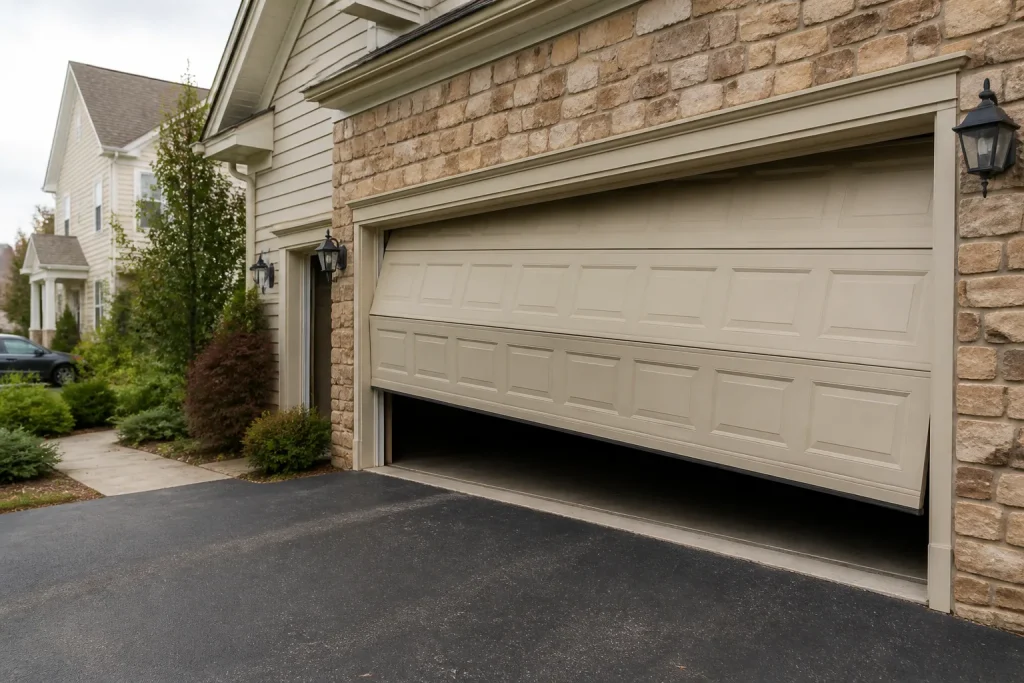
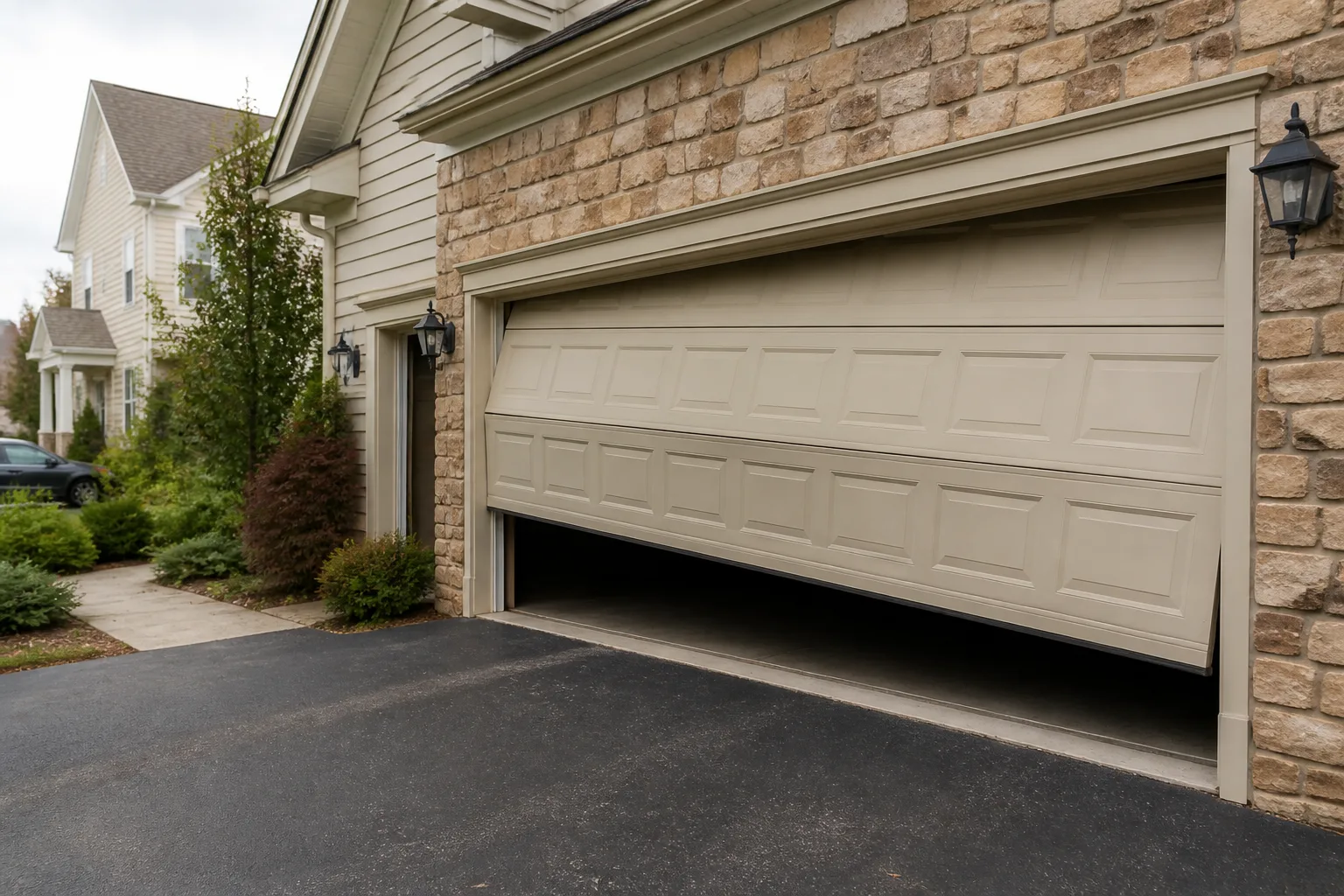
Top Signs You Need Garage Door Service – Don’t Ignore These
Most garage door failures announce themselves weeks before they actually happen. The warning signs are mechanical and audible, and they follow a predictable pattern: a slow spring, a noisy roller, a door that hesitates in cold weather. Catch it early and you’re scheduling a repair on your terms. Ignore it and you’re calling us at an inconvenient hour with a car trapped inside. Here’s how to read the pattern in South Riding and know exactly how much time you have.
If you’d rather not crawl around the tracks yourself, call (877) 509-3053 and we’ll take a look.
Why Warning Signs Come in Stages, Not a Checklist
The useful way to think about garage door problems is as a progression, not a list of symptoms to tick off. A door doesn’t fail on a Tuesday because a spring snapped out of nowhere. It fails because three smaller things degraded in sequence over two to eight weeks, and nobody noticed.
South Riding homes fall into a rhythm here that’s worth understanding. The doors we see across the neighborhood usually run one or two cycles in the morning and again in the evening, which means a worn component gets exercised a couple of times a day before anyone pays attention. That slow, repetitive stress is what gives you the warning window.
We break the signs into three rough stages:
- Early stage (weeks 2-8 out): subtle changes in sound, speed, and smoothness. The door still works, so most people ignore these.
- Middle stage (days to weeks out): visible wear, hesitation, and a door that needs occasional nudging. This is the sweet spot for a scheduled, non-emergency repair.
- Late stage (hours to days out): grinding, a door that reverses, or one that won’t move at all. At this point you’re in emergency territory.
The whole point of learning the pattern is to catch problems in the early and middle stages, when a garage door repair is something you book, not something you survive.
The Five-Minute Visual Inspection You Can Do Today
You can check the most important parts of a garage door in five minutes without touching anything that can hurt you. Don’t touch a spring or cable while it’s under tension. Those are under load even when the door is down, and a snapped component can cause serious injury. Look, don’t handle.
Run this inspection with the door in these conditions:
- Springs: With the door closed, look at the coiled spring above the door. A healthy torsion spring is a clean, even coil. A gap of an inch or more in the coil is a sign it’s worn and close to failing. Also watch for rust lines and cracks.
- Cables: Check the steel cables running down each side. Fraying, kinks, or a cable hanging loose means stop using the door and call a pro.
- Rollers: With the door partially open, look at the rollers in the track. Chipped or cracked nylon rollers, or flat-spotted steel ones, need replacing. This is one of the cheaper fixes you can make.
- Bottom seal: Look under the door. A cracked, torn, or flattened seal lets in cold air, pests, and water. A cheap replacement that saves your energy bill.
- Tracks: Glance down each track. Dents, bends, or debris in the channel are worth flagging.
We walk through this same inspection on any visit. Homeowners in South Riding can do this check in a few minutes and spot the early signs before they become an emergency call at the worst possible moment.
Reading the Sounds: What Your Door Is Telling You
The sounds a garage door makes fall into three categories, and each one points at a different problem. Learning to separate them is the single most useful diagnostic skill a homeowner can have.
Normal operational noise is a low, steady hum from the opener and the soft roll of wheels on track. If you’ve had the door a while, this is the baseline. Compare everything to that baseline.
Harmonic vibration is a rattling or buzzing that seems to come from the door itself. It usually means loose hardware: a bracket, a hinge, or a bolt that’s worked itself out. It’s common and usually a straightforward fix.
Grinding or scraping is the sound that should make you stop. Grinding points to roller bearing failure or a damaged track. If the rollers have seized, they’re scraping metal on metal in the track, and every cycle is making it worse. A grinding noise we hear in South Riding often traces back to dry, worn rollers on an older door that hasn’t been serviced in years. That’s a mid-stage problem that’s worth catching before it wears the track.
If any of these sounds feel off to you, a quick call can tell you a lot. Our garage door opener repair team can diagnose whether the problem sits with the opener motor or the door itself.
The Cold-Weather Hesitation Worth Understanding
A door that gets stiff and slow only when the temperature drops is a different failure than one that hesitates year-round. It’s a useful distinction, because each points at a different repair.
Cold-weather hesitation is usually about metal contraction and lubricant thickening. Springs lose a little tension when it’s cold, and old grease in the rollers and hinges thickens up. The door gets stiffer, the opener has to work harder, and it slows down or stops partway.
A door that hesitates in all conditions has a different problem: worn springs, a failing opener, or misaligned tracks. If your door runs slowly on a mild Southern Virginia day too, the cause is mechanical, not environmental.
In our experience in South Riding, a door that only stumbles on the coldest mornings is a door that needs lubrication and a few hardware adjustments before the next cold stretch. A door that stumbles in July is a door that needs a closer look under the hood. Same symptom, different fix, different cost bracket. A door that needs to be pushed to start is in the late stage, and that pattern needs professional attention. We see this on Genie and Chamberlain openers, where the unit’s starting torque gets strained.
When to Call a Pro
You can handle a noisy hinge with a can of lubricant and a wrench. The moment a problem involves springs, cables, or the opener’s electrical components, hand it over. High-tension springs store enormous energy, and getting one wrong is a good way to lose a finger or worse. No homeowner should be inside a loaded spring assembly.
Call a pro when:
- You see a gap, rust line, or crack in a spring.
- Any cable is frayed, hanging loose, or looks out of place.
- The door is grinding or scraping.
- The door won’t stay up, or drops when you let go.
- The opener runs but the door won’t move, or the door reverses on its own.
A proper look by an experienced technician is part of any free estimate. Our technicians have up to 13 years of experience and work on nearly any brand a South Riding homeowner already owns, from Clopay and Amarr to Wayne Dalton and LiftMaster. You don’t need a second vendor for a brand mismatch. In our experience, a second set of eyes on a suspect door catches real issues early.
What Catching It Early Actually Saves You
Catching a problem early usually means a smaller repair rather than a full replacement. A worn roller is a cheap fix; a seized roller that’s damaged the track is a bigger job. A spring that’s showing wear can be replaced on a scheduled visit; a snapped spring at the wrong hour means emergency service.
For the higher-risk repairs, the safest approach is the one we specialize in: garage door spring repair. Our technicians are experienced with the tools and discipline that spring work requires.
Related services in South Riding: if you’re seeing signs from several of these sections at once, the fastest path is a single look at the whole system. One call covers opener electronics, springs, panels, tracks, and full garage door repair South Riding needs. We quote the price and agree on it before any work starts, so the number you approve is the number that holds.
Our technicians have up to 13 years of experience, they’re familiar with the brands homeowners already own, and our recommendations are based on what fits your door and your budget.
The Bottom Line
The signs of a failing garage door follow a pattern: early changes in sound and speed, then visible wear and hesitation, then grinding or a door that won’t move. A five-minute inspection of springs, cables, rollers, and seal tells you which stage you’re in. Catching problems early usually means a smaller scheduled repair; waiting means an emergency call. In our experience in South Riding, the homeowner who learns to read the pattern rarely gets surprised.
If you’re in South Riding and need help, Garage Door Repair South Riding offers free estimates. Call (877) 509-3053 and we’ll tell you exactly what you’re looking at, and whether it can wait or shouldn’t.
Frequently Asked Questions
The first signs are usually subtle: the door takes slightly longer to open or close than it used to, the opener motor sounds strained, or you start hearing a faint rattle you didn’t notice before. These early signs show up weeks before a failure. If you catch them in South Riding while they’re still small, a scheduled repair is usually straightforward. Call (877) 509-3053 for a free estimate if you want an exact answer.
You can’t put a reliable number on it, which is why you shouldn’t wait on a spring that’s showing signs of wear. A spring with a visible gap, rust line, or crack is already in its late stage. Replacing it on a scheduled visit is far better than calling for emergency service after it snaps. If your spring looks worn, call (877) 509-3053 today rather than waiting for the door to fail.
A noisy door isn’t dangerous on its own, but the noise is a signal worth listening to. Rattling usually means loose hardware, while grinding often means roller bearing failure or a damaged track. Both are fixable, and catching them early keeps a small repair from turning into a bigger one. Have it looked at before the next cold stretch. Call (877) 509-3053 and we’ll tell you what the noise is telling you.
You can lubricate hinges, rollers, and the track yourself with a garage door lubricant, and that’s a reasonable homeowner task. Stay away from the springs and cables. Those are under tension and belong to a trained technician. If lubrication doesn’t quiet the door, or you see worn parts while you’re at it, call (877) 509-3053 for a free estimate and we’ll take it from there.
Written by the team at Garage Door Repair South Riding.
Need Garage Door Help?
Call Garage Door Repair South Riding - the local pro we connect you with is licensed and insured, here with fast after-hours help in South Riding.
(877) 509-3053